

Confluence pages are behind authentication, so Context7 reaches them with the token you configure. The token needs read access to the spaces you want to index.
Connect Confluence
Open Settings → Integrations → Confluence, choose your deployment, fill in the fields, and use Test connection to confirm before saving.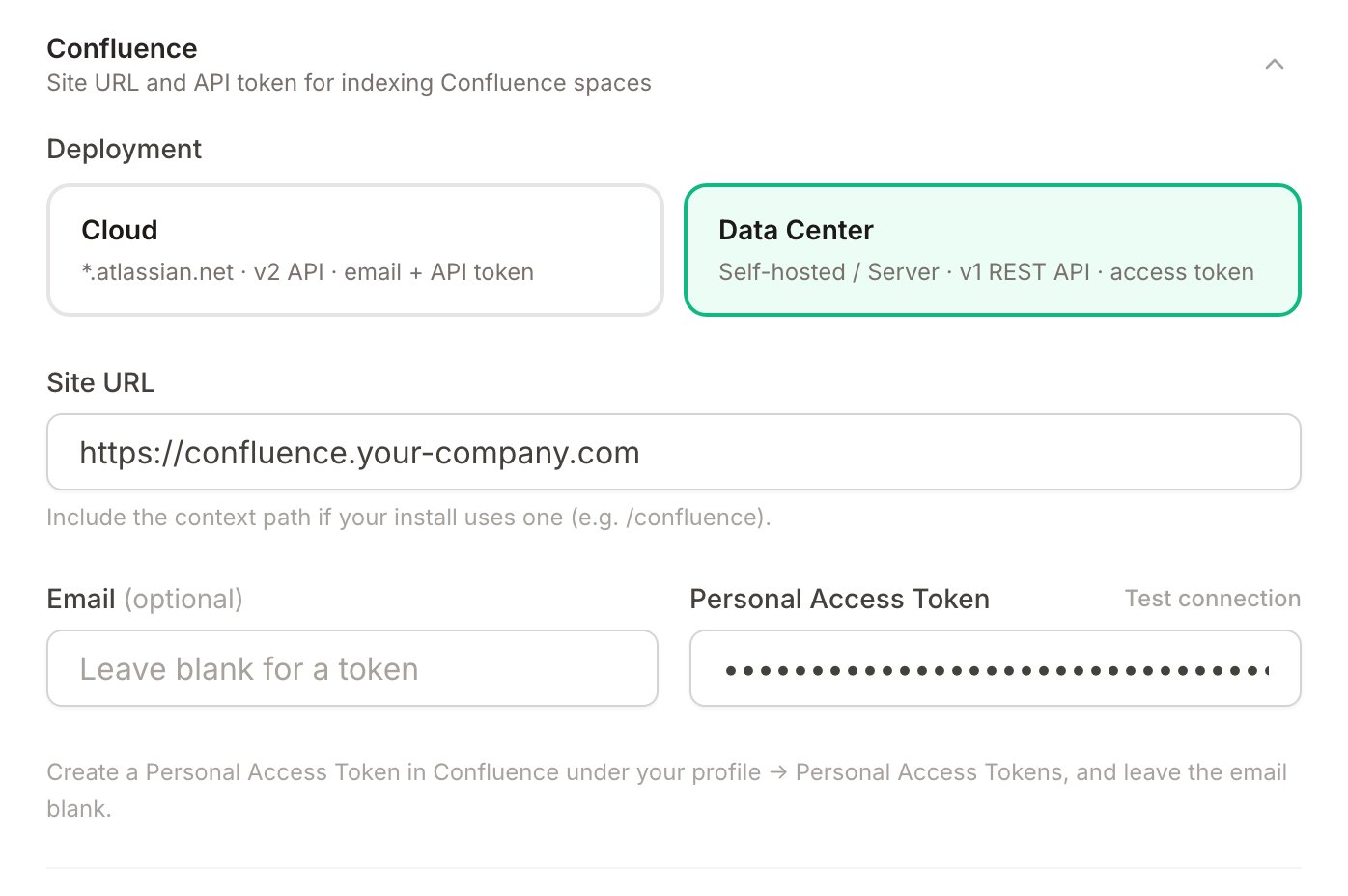
- Cloud
- Data Center / Server
Cloud uses the Confluence v2 REST API and authenticates with the email and API token together.
Point Context7 at a service account rather than a personal login, so indexing does not depend on one person’s access.
Index a space
Go to Add and choose Confluence.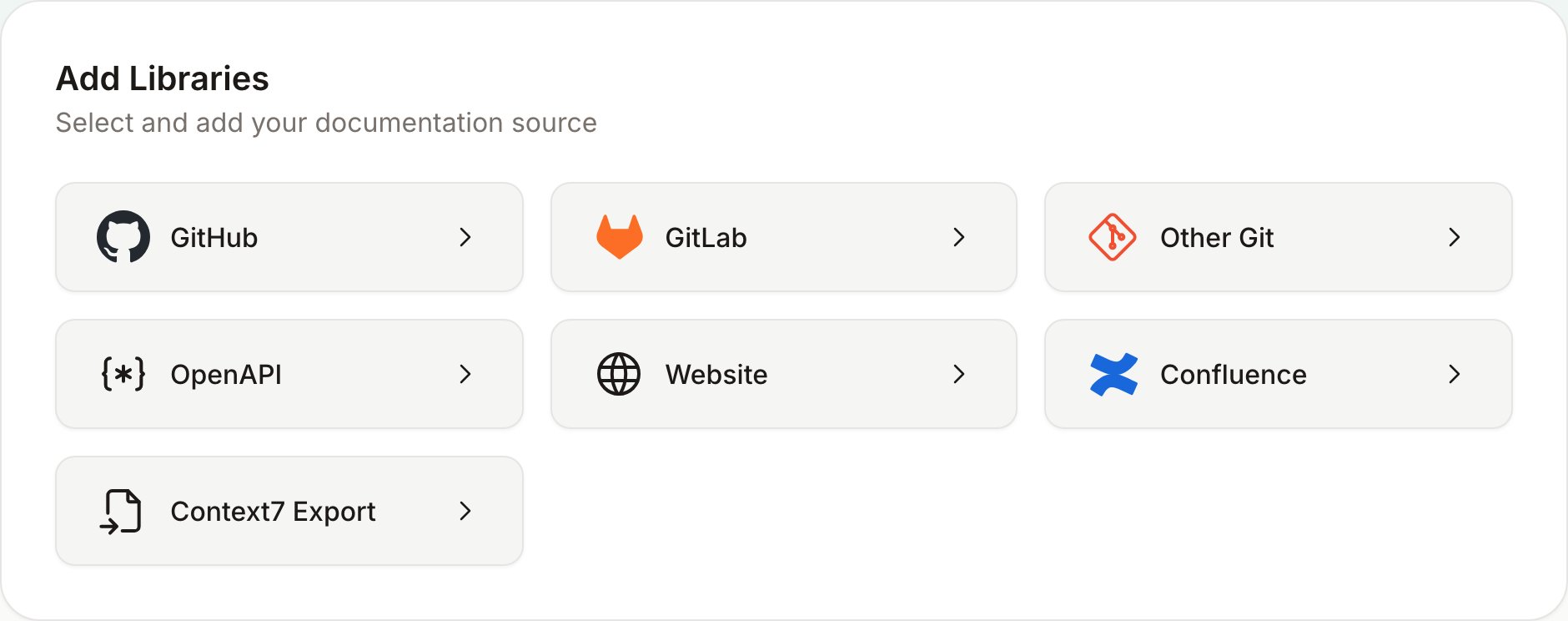
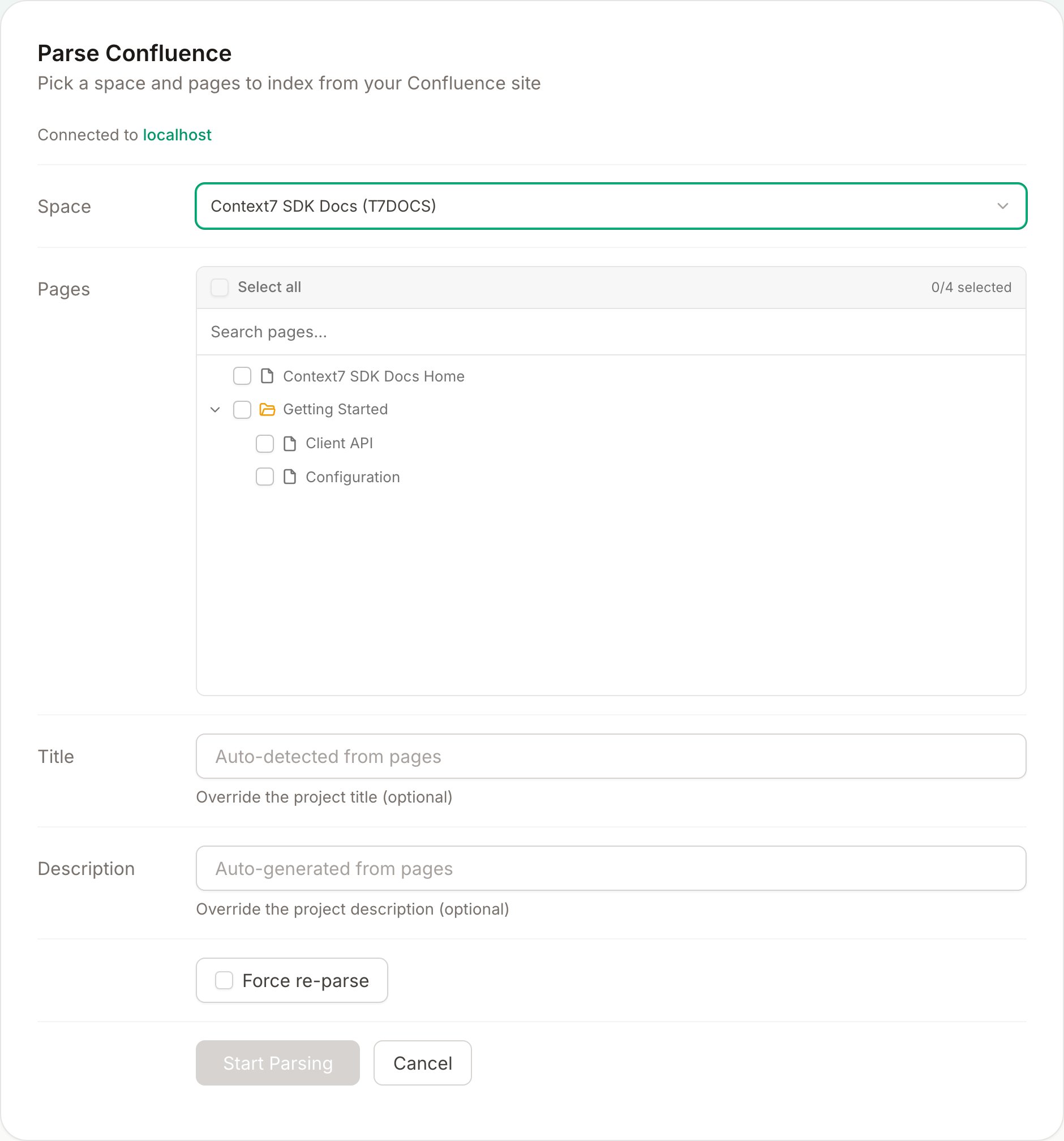
1
Select a space
Choose the space from the dropdown, or paste a space URL (for example
https://your-site.atlassian.net/wiki/spaces/TEAM) into Space URL to select it directly — handy when the account can read many spaces.2
Choose the scope
Leave Index the entire space on to index everything, which is the fastest path and the right choice for large spaces. Turn it off to pick individual pages: the page tree mirrors the space hierarchy, so selecting a parent selects its children. Very large spaces load their pages in batches — use Load more pages to fetch the rest, and the search box to filter.
3
Start parsing
Context7 fetches the pages, converts them to Markdown (code blocks, tables, and callouts are preserved), and indexes them. The project appears under your libraries when it finishes.
Indexing the entire space means a later refresh also picks up pages added since. Selecting a specific subset pins the project to exactly those pages.
type: confluence entry with a spaceKey to your manifest, and it reuses this same connection.