

Group-based access relies on the group claim from your identity provider, so it works when your users sign in through SSO. See OIDC SSO or Microsoft Entra SSO for setup. For password users, grant access to individual users instead.
Manage access in one place
Open Teamspace Settings, go to the Access tab, and find the Library Access section. You get a table of every indexed library, its current access, and who can reach it, with the workspace default at the top. Search by name, filter to restricted libraries only, and edit any library inline.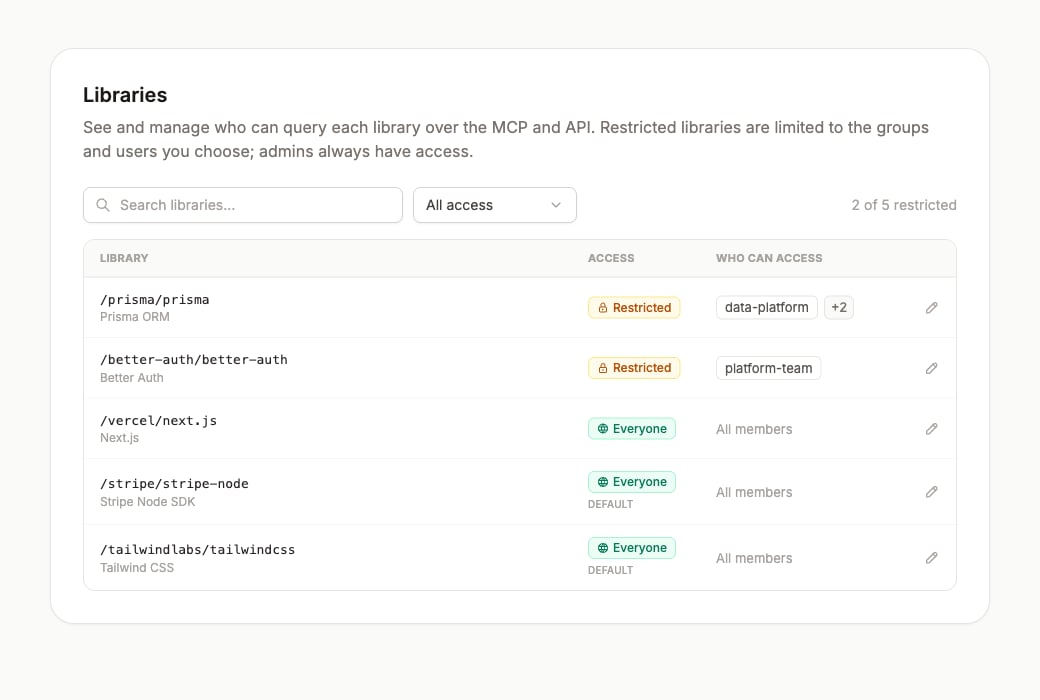
- Access: whether the library is open to Everyone or Restricted. Libraries you have not configured follow the workspace default and are tagged
default. - Who can access: the groups and users on a restricted library,
All memberswhen it is open, orAdmins onlywhen it is restricted but no one has been added yet. - Edit: opens the access editor for that library.
Restrict a library
You can edit a library from the Edit button in the table, or from the library’s own settings dialog. Both open the same controls.1
Switch to Restricted
Select Restricted, then add the SSO groups that should have access and any individual users you want to grant directly. Click Save changes.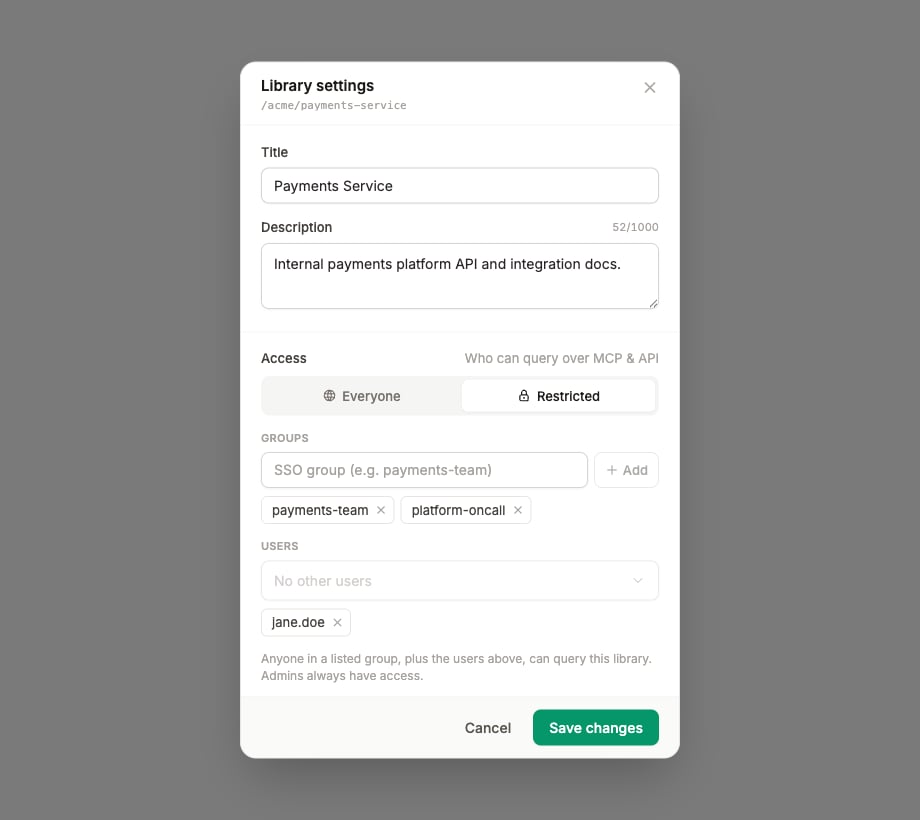
2
Reopen it when needed
To open a library back up to the whole workspace, set its access to Everyone.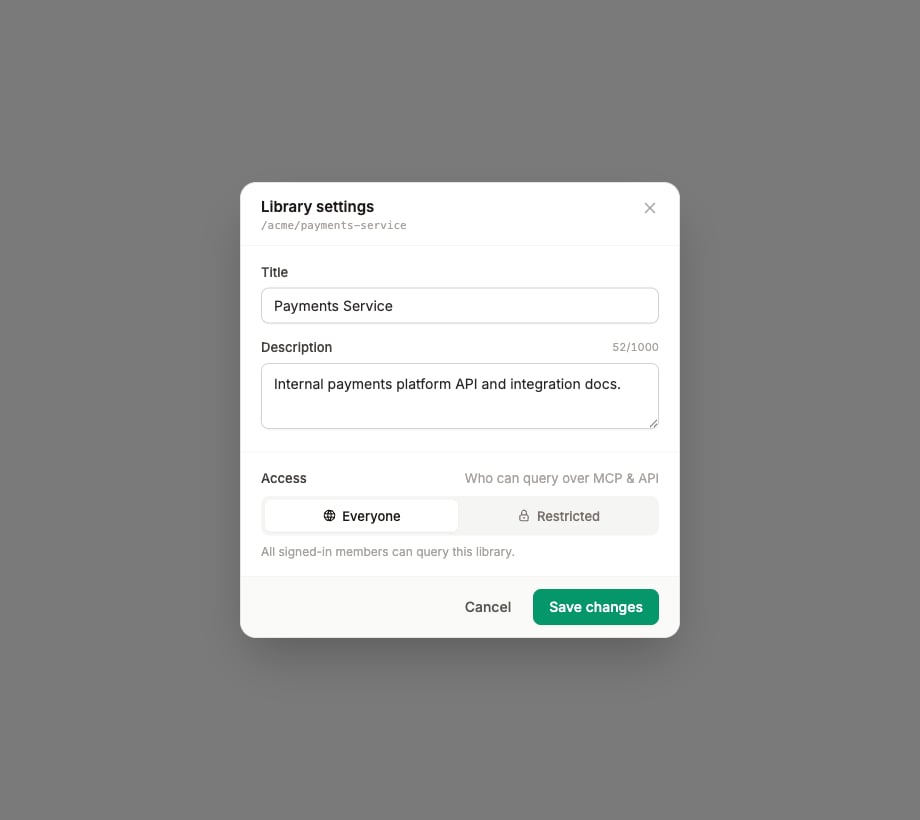
Set the default for new libraries
New libraries are open to everyone unless you change the workspace default. Use the Restrict libraries by default toggle in the Default access card of the Library Access section. Turn it on to flip your instance to deny by default. Members then see only the libraries they have been explicitly granted, and each new library stays private until you grant access to it.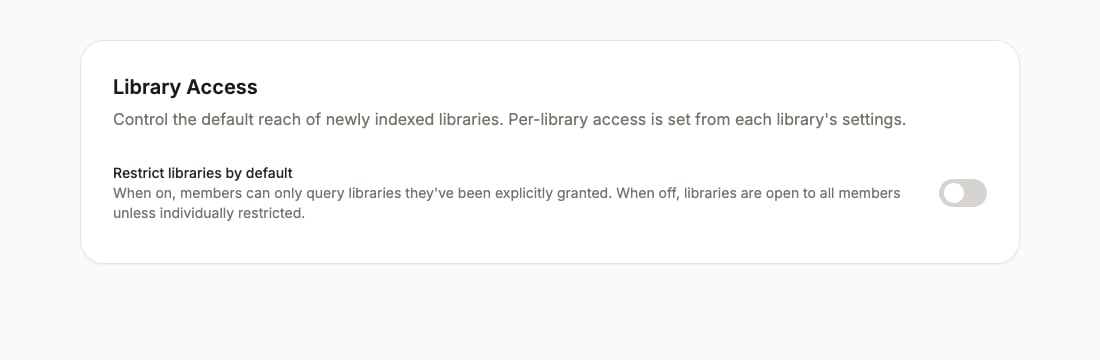
How it applies
Access is enforced everywhere a user reaches a library:- MCP: restricted libraries are hidden from library search results, and a documentation request for a library the user cannot access returns the same “not found” response as a library that isn’t indexed. Restricted libraries can’t be told apart from ones that don’t exist.
- API: the same filtering applies to library search and documentation requests made with a personal API key.
- Dashboard: members only see the libraries they can access in their library list.